

What if the most meaningful Ramadan you ever experienced also helped heal the planet?
This holy month of Ramadan is a special time for reflection and growth. It offers a powerful opportunity to deepen our faith. But it can also be a period to reconsider our impact on the world around us.
The core values of this holy month—like self-discipline, mindfulness, and charity—align perfectly with caring for our environment. This connection forms the heart of a transformative approach to observance.
Many believe we have a sacred responsibility as stewards of the Earth. This means our actions, including how we consume resources, carry weight. The goal is to create a legacy of care for future generations.
This article provides practical steps. We will explore ways to reduce waste and conserve resources. The aim is to make your spiritual journey more meaningful through environmental responsibility.
Key Takeaways
- Ramadan is a unique time to combine spiritual reflection with environmental care.
- The values of mindfulness and discipline naturally support sustainable living.
- Humans are viewed as custodians with a responsibility to protect the Earth.
- Small changes in consumption can significantly reduce your ecological footprint.
- This approach aims to add deeper meaning to your spiritual practice.
- Practical guidance can help you honor your faith and the planet simultaneously.
Embracing a Green Lifestyle This Ramadan
Observing this sacred time can become a powerful catalyst for positive environmental change. A green Ramadan means adopting practices that respect our planet while enhancing spiritual growth.
Understanding the Spiritual and Environmental Impact
Every person leaves both an ecological and spiritual footprint. Your ecological footprint measures the carbon dioxide produced through daily activities. This includes transportation, electricity use, and food choices.
Americans typically have a footprint five to ten times larger than people in developing regions. This creates significant climate impact through pollution and resource consumption.
Fasting teaches self-control and moderation. These habits can extend to reducing our environmental impact throughout the year. We have responsibility as stewards of our planet.
Connecting Mindfulness to Sustainable Habits
Mindfulness during this period helps develop lasting sustainable habits. This approach improves life quality while addressing urgent climate challenges.
Global warming, deforestation, and biodiversity loss require individual action. Making environmental care part of spiritual practice creates meaningful change.
A green lifestyle serves as a model for responsible behavior. It fulfills religious duty while protecting our environment for future generations.
Practical Steps for a Sustainable Ramadan Challenge
By focusing on mindful resource management, you can deepen both your faith and your environmental stewardship. Simple changes make a significant impact when practiced consistently.
Efficient Food Planning and Waste Reduction
Food waste increases dramatically during this holy period. Plan meals carefully to avoid excess. Create shopping lists and stick to them.
Cook appropriate quantities rather than preparing too much. Focus on balanced meals with plenty of fruits and vegetables. Choose local produce to reduce transportation energy.
Drink six to eight glasses of water between meals. Use tap water instead of bottled to avoid plastic waste. These small adjustments significantly reduce your environmental impact.
Energy, Water, and Resource Conservation
Turn off lights and appliances when not in use. This simple habit conserves energy throughout the day. Unplug devices that aren’t needed.
Be mindful of water usage during ablution. Fix dripping taps promptly. Every drop saved helps preserve precious resources.
Choose reusable items over disposable ones. Avoid plastic cutlery and styrofoam containers. These practices support a cleaner environment for everyone.
Implementing the Sustainable Ramadan Challenge in Your Daily Routine
Your daily routine throughout this holy month offers countless moments to make choices that honor both your faith and the environment. This time is a perfect opportunity for people to build lasting, positive habits. Simple ways to integrate care for our planet into each day can make a significant difference.
Introducing Eco-Friendly Practices During Iftar and Suhoor
Meals are a great starting point. Serve smaller portions to drastically cut down on food waste. It’s better to take a little and return for more than to throw away uneaten food.
This practice also helps judge your appetite correctly. It is a valuable lesson, especially for children, about mindful consumption. These tips reduce food waste and prevent overeating.
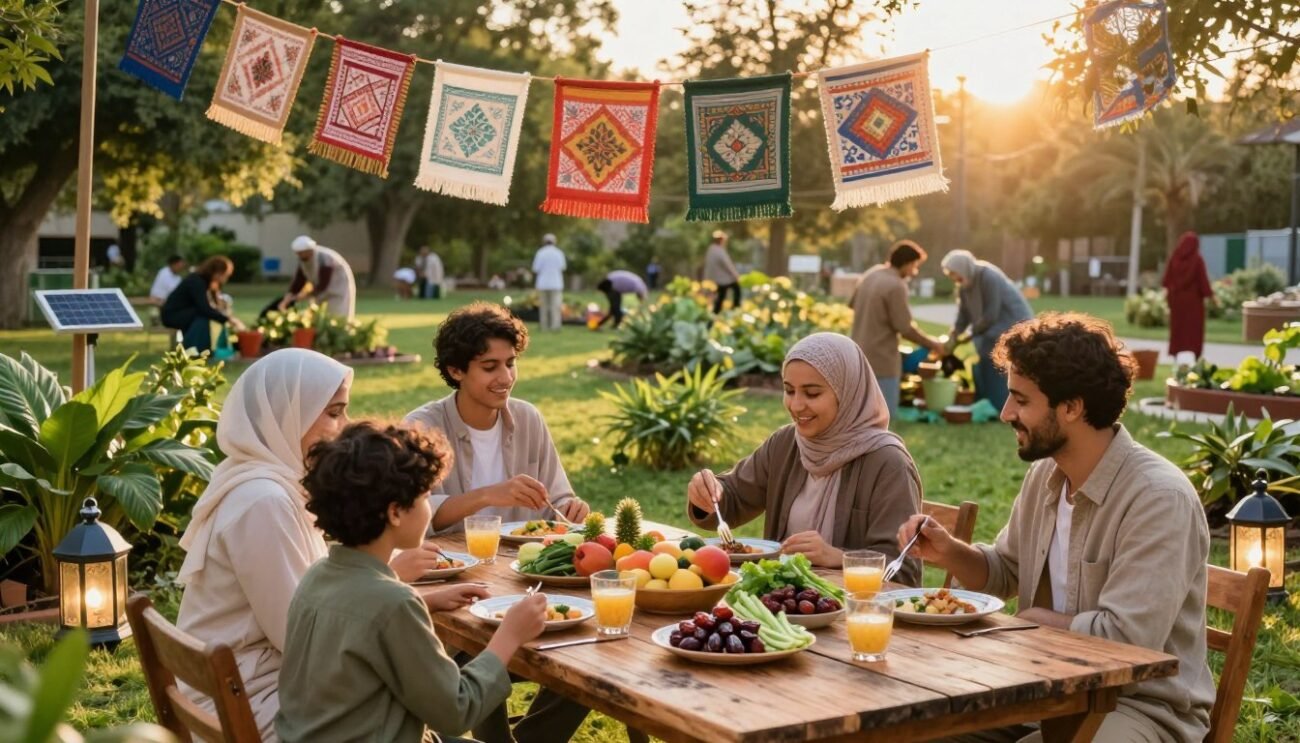
Choose reusable plates and cutlery over plastic or styrofoam. This small change can become a core part of your family’s iftar tradition. It shows a deep respect for resources.

Promoting Local Produce and Community Involvement
Supporting local farmers is a powerful action. Food from nearby sources has a lower carbon footprint because it travels less. This helps fight climate change and reduces pollution.
Get involved in community efforts like the Ramadan sharing fridge initiative. Donating pre-packed meals supports those in need and prevents waste. It protects our planet and its precious resources.
Consider forming a green team at your mosque. Focus on recycling, saving energy by dimming lights, and conserving water by fixing taps. Planting trees improves air quality for everyone.
These collective efforts during month ramadan show how people can create a healthier world together. Every action, big or small, contributes to a better future.
Conclusion
As this sacred period unfolds, it presents a unique chance to align spiritual devotion with planetary care. This approach merges personal growth with environmental stewardship, creating benefits that extend throughout the entire year.
Simple adjustments to daily routines during this observance can generate meaningful positive effects for our world. These practices enhance life quality while reducing your ecological impact on future generations.
Begin with just a few of these suggestions this year. Each conscious choice honors both faith and our responsibility to protect natural resources.
This blessed month offers the perfect opportunity to refresh spiritual commitment while establishing eco-friendly habits. The lasting impact of these changes creates a legacy of thoughtful consumption and environmental respect.
FAQ
How can I reduce my food waste during the holy month?
Plan your meals carefully. Make a shopping list and stick to it. Cook in smaller portions and store leftovers properly. Composting scraps is another great way to minimize your environmental footprint.
What are simple ways to conserve water?
Be mindful of your usage. Turn off the tap while washing dishes or performing ablution (wudu). Consider using a basin to collect water for plants. Fixing any leaks promptly also makes a big difference for the planet.
How does this challenge help my community?
Supporting local farmers and businesses reduces carbon emissions from transportation. Sharing extra iftar meals with neighbors or donating to food banks strengthens community bonds and ensures resources help people in need.
Can I still have a meaningful month while focusing on being green?
Absolutely. The principles of mindfulness, gratitude, and moderation are central to both the spiritual and environmental aspects. This approach encourages a deeper connection to your consumption and its impact on the world.
What is one easy habit to start with?
Begin by eliminating single-use plastic. Use reusable containers for storing food and bottles for water. This small change significantly cuts down on pollution and is a powerful step toward a more responsible lifestyle.