What if the solution to a massive global issue was hiding in your own kitchen? Every year, a staggering one-third of all food produced for people is lost or discarded. This amounts to 1.3 billion tons.
In North America, the problem is particularly pronounced. The average person discards enough edible items each month to feed someone else for over two weeks. It’s a complex issue with deep roots.
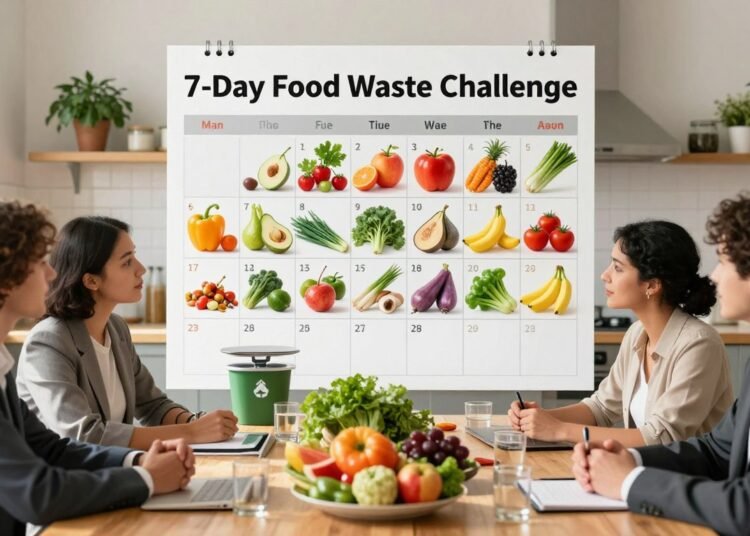
This page is your entry point to changing that. We present a practical 7-day initiative built on a powerful idea. In 2016, OpenIDEO launched a global call for solutions. It engaged over 20,000 individuals from 113 countries.
The result was incredible. The community generated more than 450 innovative ideas. They also hosted 80 events worldwide. This proved that collective action can create real, workable strategies.
Our guide builds on that success. It offers a clear, step-by-step plan for your household. You will learn methods tested by thousands. This is not just about the environment. It’s about saving money and strengthening community ties.
The process is designed for busy lives. It requires minimal time but delivers maximum impact. By the end of the week, you will have new habits and practical skills. You will join a movement turning a global problem into tangible opportunities.
Key Takeaways
- A third of the world’s food supply is lost or thrown away annually.
- The average American’s monthly discarded food could feed another person for 19 days.
- Community-driven initiatives, like the 2016 OpenIDEO challenge, have proven effective.
- This 7-day plan provides actionable steps derived from real-world success.
- Reducing waste leads to significant cost savings and positive community impact.
- The challenge is designed to fit easily into a busy schedule.
- Participants gain practical skills and become part of a larger solution.
Understanding the Global Context of Food Waste
The scale of our global consumption dilemma becomes clear when examining recent international findings. Comprehensive studies reveal systemic patterns affecting nations worldwide.
Food Waste Statistics and Environmental Impact
The 2024 UNEP Report provides sobering data. Approximately 1.05 billion tonnes were discarded in 2022 alone.
This represents 19% of all items available to consumers globally. Households account for 60% of this total amount.
The environmental consequences are significant. This issue generates 8-10% of global greenhouse gas emissions.
It also uses nearly 30% of the world’s agricultural land. The water needed annually exceeds any single country’s consumption.
Insights from Global Reports and Data
Research from 93 countries shows this is a universal concern. High and medium-income nations show surprisingly small differences.
The distinction between loss and waste is important. Loss occurs during production and distribution stages.
Waste happens at retail and consumption levels. Both represent enormous resource inefficiencies.
This problem exists alongside global hunger issues. While massive quantities are discarded, millions face food insecurity.
The United Nations has established clear reduction targets. Sustainable Development Goal 12.3 aims to halve this issue by 2030.
Embracing the Food Waste Challenge: Practical Steps for Your Household
Your daily routine holds the key to making meaningful progress on an important global matter. Residential units generate approximately 338 pounds of discarded items annually per home. This section provides proven methods that help families cut their discard rates significantly.
Actionable Strategies for Meal Planning and Smart Shopping
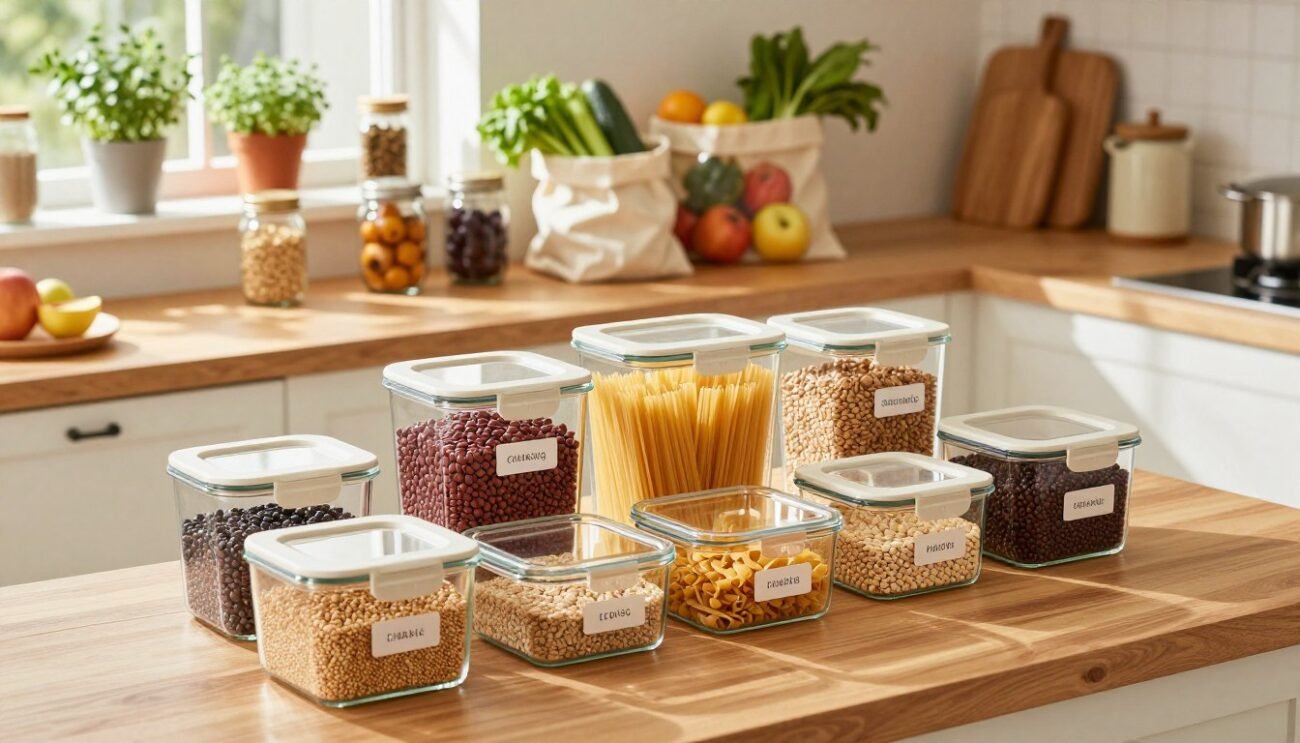
Meal planning forms the foundation for effective resource management. Creating weekly menus before shopping prevents impulse purchases. Every item bought should have a specific purpose.
Smart shopping involves selecting loose produce instead of pre-packaged options. This allows consumers to purchase exact amounts needed. Understanding seasonal availability ensures peak freshness.
Simple Daily Tasks to Reduce Food Loss
Proper storage knowledge is essential for preservation. Some items continue ripening at home while others do not. Refrigerators set at 5°C (41°F) extend product life significantly.
Keep leftovers visible at the front of your refrigerator. Wait until current supplies are 75% used before restocking. Freezing extends item life by 47% compared to fresh counterparts.
Completing the cycle, composting turns inedible parts into valuable garden resources. These simple daily tasks require minimal time but deliver maximum impact.
Implementing Innovation and Community-Driven Solutions
Technology platforms are creating unprecedented opportunities for collective action. Human-centered design approaches engage thousands globally to generate practical, scalable ideas.
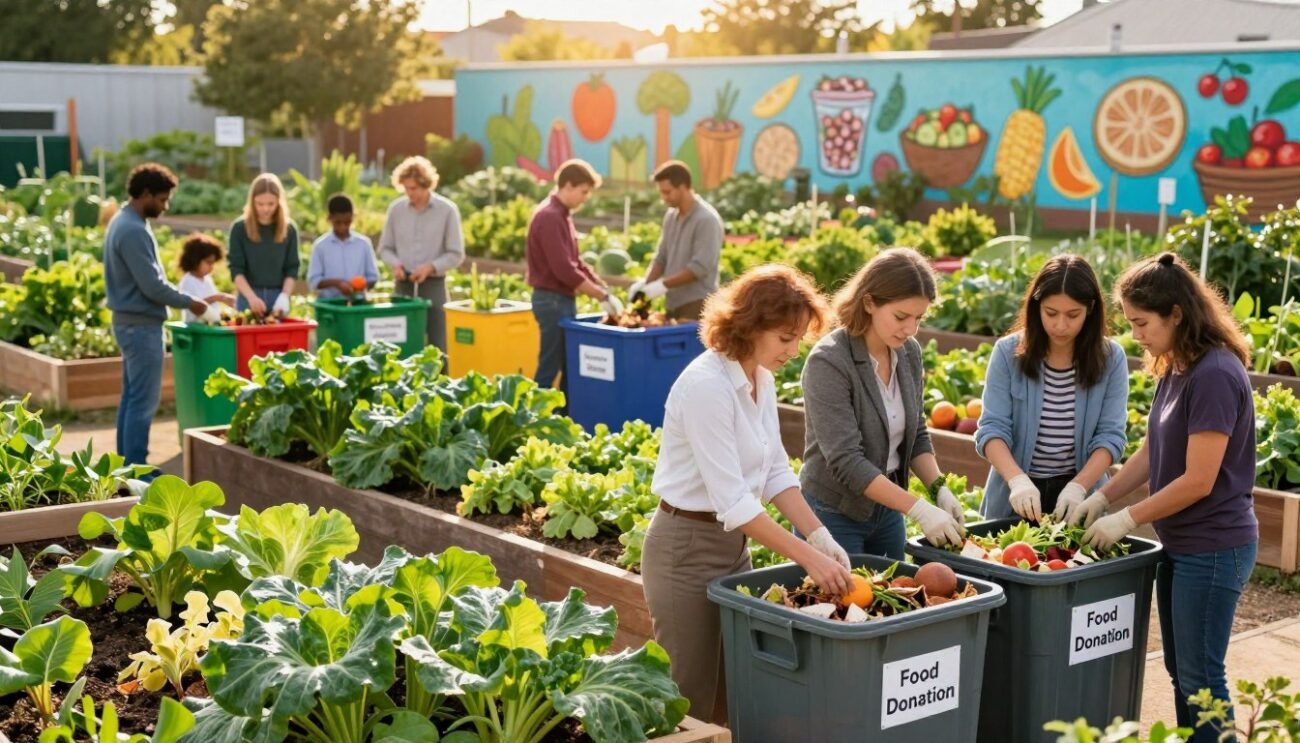
OpenIDEO’s initiative demonstrated remarkable scope. Over 20,000 participants from 113 countries generated 450+ concepts. They hosted 80 events across 30+ nations.
Leveraging Technology and Design Initiatives
The Food Waste Alliance emerged as a pioneering model. This network of 80 partner organizations provides ongoing mentorship. It functions as a virtual accelerator for innovators.
Partners include major entities like Feeding America and Google. They offer targeted support and resource access. This sustains impact beyond initial campaigns.
Building Community Partnerships and Sustainable Programs
RISE exemplifies the power of community support. This marketplace transforms organic leftovers into ingredients. They prototyped during the challenge phase.
Through Alliance connections, RISE partnered with Food-X accelerator. Within one year, they doubled their team size. They established partnerships with 10+ breweries.
The company reduced spent grain discard by over 3,000 pounds. Founder Bertha Jimenez credits the Alliance for their success. It provided essential connections and expert guidance.
Real-World Success Stories from Global and Local Efforts
Other innovative concepts include a zero waste grocery store in New York. Vienna hosted a pop-up art experience raising awareness. Both demonstrate creative community engagement.
Corporate programs play a critical role in sustainable systems. Lineage’s donation program redirects surplus to communities in need. This addresses both discard reduction and insecurity.
The UK’s Courtauld Commitment shows long-term success. Launched in 2005, it’s now in Phase 4. The program reduced streams by millions of tonnes.
These efforts prove multi-sector collaboration creates real change. Successful initiatives require partnerships across organizations. Technology enables better tracking and optimization.
Conclusion
Seven days can transform your approach to managing household resources permanently. This personal opportunity aligns with the USDA and EPA’s goal of achieving 50% reduction by 2030.
As Devon Klatell of The Rockefeller Foundation notes, complex systemic issues require diverse audiences and collaboration. Your participation becomes part of this necessary worldwide change.
There is no single solution to this multifaceted problem. However, combining individual actions with community programs creates comprehensive progress. This approach has already demonstrated success globally.
View this as the beginning of lasting behavior change. The benefits extend beyond your budget to community security and environmental health.
The strategies and connections introduced here offer ongoing support. Join the broader movement for continued learning and innovation.
Start your 7-day journey today. These practical steps are accessible and proven effective. Create meaningful results within one week while building habits that last.
FAQ
How much edible material do households typically discard annually?
In the United States, the average family throws away nearly a third of the groceries they purchase. This adds up to approximately 1,500 pounds of discarded edible material per household every year, representing a significant loss of resources and money.
What is the difference between food loss and food waste?
The term “loss” often refers to edible items that are spilled or spoil before reaching consumers, typically during production or transport. “Waste” generally describes items discarded by retailers or in our homes, even if they are still safe to eat. Both contribute to the larger problem.
What are some simple daily tasks I can start doing today?
Begin with a quick fridge audit each morning. Move older products to the front. Use leftovers for lunch. Store fruits and vegetables properly to extend their life. These small, consistent actions can dramatically cut down on what gets thrown out.
How can technology help me reduce what I throw away?
Several apps are designed to help. Some provide smart meal planning based on what you already have. Others offer better storage tips or connect you with local community programs to share excess items, turning potential waste into a valuable resource for others.
Are inedible parts like banana peels considered waste?
While not suitable for consumption, these parts don’t have to end up in a landfill. Composting turns scraps like peels, eggshells, and coffee grounds into nutrient-rich soil. This practice completes a natural cycle and supports a more sustainable system.